

Abdomen CT
A fast, detailed scan of your abdominal organs, giving your physician a comprehensive overview of what's happening inside, before symptoms have a chance to appear.
Detect abdominal disease before symptoms appear
The abdomen is home to some of the body's most vital organs, and many of the most serious conditions affecting them, including cancer of the liver, kidneys, and bowel, develop without any warning signs. By the time symptoms appear, the window for early intervention has often already narrowed.
A CT scan of the abdomen creates detailed cross-sectional images of every major abdominal structure in a single examination. It can detect tumors, vascular abnormalities, organ enlargement, and other changes at a stage when treatment options are greatest and outcomes are best.
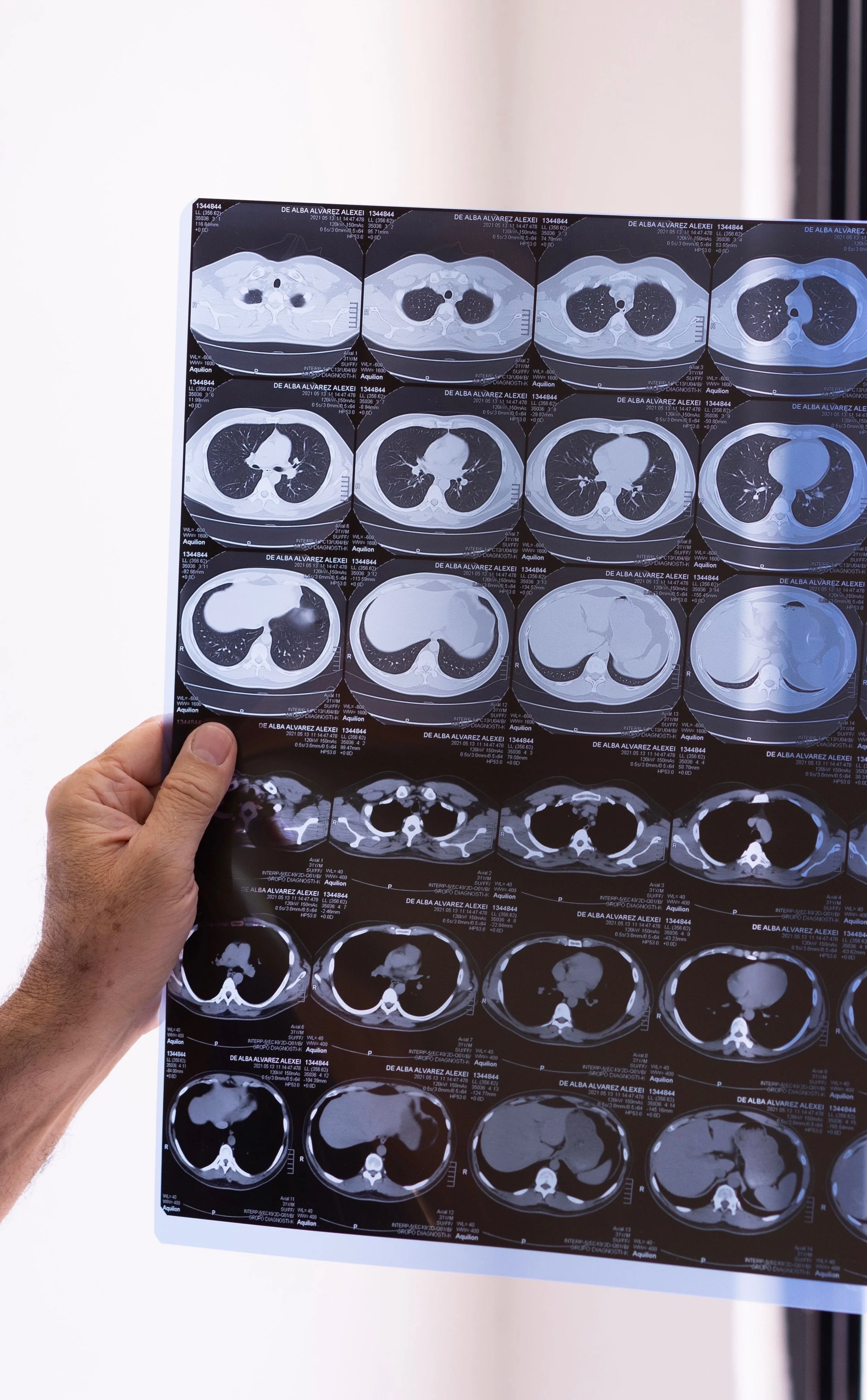
What is an abdominal CT scan?
CT, computed tomography, also called a CAT scan, uses a series of low-dose X-rays taken from multiple angles to produce detailed cross-sectional images of the body's interior. A computer combines these into a three-dimensional picture that your physician can examine slice by slice.
Unlike MRI, CT uses ionizing radiation. The dose used for an abdominal scan is low and carefully controlled, and for most patients the clinical benefit of the information gained outweighs the minimal radiation exposure. The scan itself takes only 10–15 minutes, significantly faster than an MRI, and is particularly well-suited to imaging blood vessels, calcifications, the bowel, and the overall architecture of the abdomen.
In many cases an intravenous contrast agent is used to improve the visibility of blood vessels and organ tissue. Your physician will advise whether contrast is appropriate for you ahead of the examination.
What's the difference between CT and MRI?
Both MRI and CT produce detailed images of the abdominal organs, but they work differently and each has its strengths.
MRI uses magnetic fields and radio waves, no radiation, and is particularly good at distinguishing between different types of soft tissue. It excels at characterizing lesions in the liver and pancreas, assessing the bile ducts, and detecting subtle early changes in organ tissue. That's why MRI is the foundation of Elfcare's Full-body health check: it gives the most detailed soft-tissue picture available without any radiation exposure, making it well suited for proactive screening that can be repeated over time.
CT uses low-dose X-rays and is faster. It's better suited to imaging blood vessels, calcifications, the bowel wall, and getting a broad structural overview of the entire abdomen quickly. In certain clinical situations, such as suspected vascular abnormalities, bowel-related conditions, or when a rapid comprehensive scan is needed, CT can provide information that complements or goes beyond what an MRI shows.
Whether a CT scan of the abdomen is appropriate for you is always a matter of individual medical assessment. At Elfcare, this decision is made in consultation with one of our specialist physicians, who reviews your health history, any previous findings, and your specific situation before recommending the right examination.
What can an abdominal CT scan detect?
An abdominal CT can provide valuable insight into a wide range of conditions. Conditions that may be detected include:
-
Liver tumors and metastases from cancer elsewhere in the body
Fatty liver disease and early signs of cirrhosis
Liver cysts and benign lesions
Gallstones and bile duct obstruction
Liver abscesses
-
Pancreatic cancer and tumors
Acute and chronic pancreatitis
Pancreatic calcifications and cysts
-
Kidney stones
Kidney tumors and renal cell carcinoma
Hydronephrosis (blocked kidney drainage)
Adrenal tumors and adenomas
-
Abdominal aortic aneurysm
Vascular calcification and atherosclerosis
Portal vein abnormalities
-
Enlarged spleen (splenomegaly)
Enlarged lymph nodes — potential sign of lymphoma or metastatic disease
-
Bowel tumors and polyps
Diverticular disease and diverticulitis
Signs of bowel obstruction
Fluid accumulation in the abdominal cavity (ascites)
Appendicitis and other acute abdominal conditions
Abdomen CT scanning at Elfcare
At Elfcare, an abdominal CT can be arranged as a standalone examination. The scan is performed at an accredited radiology partner clinic and read by a specialist radiologist. Your results are then reviewed with one of Elfcare's physician specialists, who goes through every finding with you, explains what they mean, and outlines any recommended next steps.
If you'd like to discuss whether an abdominal CT scan is right for you, contact us directly. The price for a standalone abdominal CT scan is 4,000 SEK.
Book your health check
Elfcare's full-body health check includes a full-body MRI, detailed blood tests, and consultations with our specialist doctors, built for early detection and prevention.
Price for full-body health check: 35,000 SEK
Fill in your details and we'll send you a link to book your first consultation. Slots are always available within the week.
FAQ - Abdomen CT
-
The dose used in an abdominal CT is low and well within established safety limits. For most people, the medical value of the information gained far outweighs the minimal radiation exposure. If you have concerns, your physician can discuss whether CT or MRI is the more appropriate option for your situation.
-
For some CT examinations, you may be asked to avoid eating for a few hours before the scan, particularly if contrast is used. You'll receive specific preparation instructions after booking.
-
Not always. Whether contrast is used depends on what your physician is looking to assess. Contrast improves the visibility of blood vessels and organ tissue but requires a brief IV injection. Your physician will advise you ahead of the scan.
-
Both produce detailed internal images, but they use different technology. MRI uses magnetic fields and radio waves, no radiation, and is particularly good at distinguishing between different types of soft tissue. CT uses low-dose X-rays, is faster, and is better suited to imaging blood vessels, calcifications, bowel, and getting a broad overview of the abdomen quickly. Your physician can help determine which is most appropriate for your needs.
-
All results are reviewed with a specialist physician who explains exactly what the findings mean. If follow-up or referral is needed, Elfcare handles that process.
-
A standalone abdominal CT scan is 4,000 SEK.
Elfcare's full-body health check is 35,000 SEK and includes a full-body MRI, blood tests, and two physician consultations.
-
CT is available in Stockholm, Göteborg, Malmö, Lund, Uppsala och Karlstad.