What is an MRI and how does it work?
Last updated: 30 July 2026
Reviewed by: Elfcare quality team
Wanting to know what is happening inside your body is a natural part of taking care of your health. An examination with a magnetic camera, known as an MRI (Magnetic Resonance Imaging), is one of the most advanced methods for examining the body's internal health and detecting potential issues early. The procedure is gentle and uses no radiation. In this article, we will go through how an MRI works and what is good to know before an examination.
How does an MRI work?
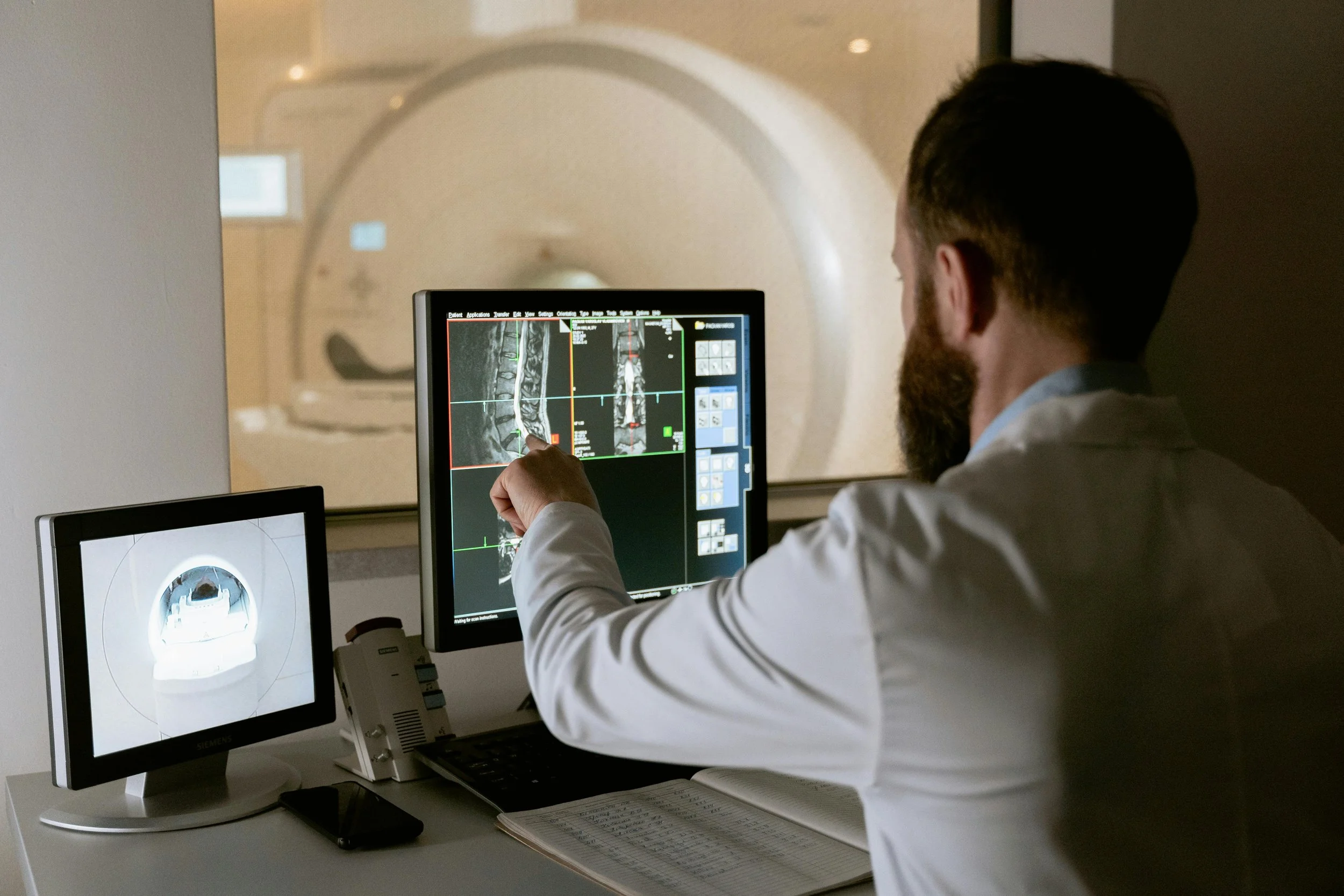
Unlike a standard X-ray or a CT scan, an MRI uses no ionizing radiation. Instead, the camera utilizes a very strong magnetic field combined with radio waves. The human body consists largely of water, which in turn contains hydrogen atoms. When you lie inside the MRI scanner, these atoms react to the magnetic field. By sending in radio waves, the camera can read signals from the atoms and convert them into detailed cross-sectional images of the body's internal organs and tissues.
What makes an MRI unique is its ability to image soft tissue and nerves with a clarity that standard X-rays and CT scans often miss. It can detect inflammation, small structural changes, or cysts long before they cause symptoms or discomfort.
How is the MRI performed?
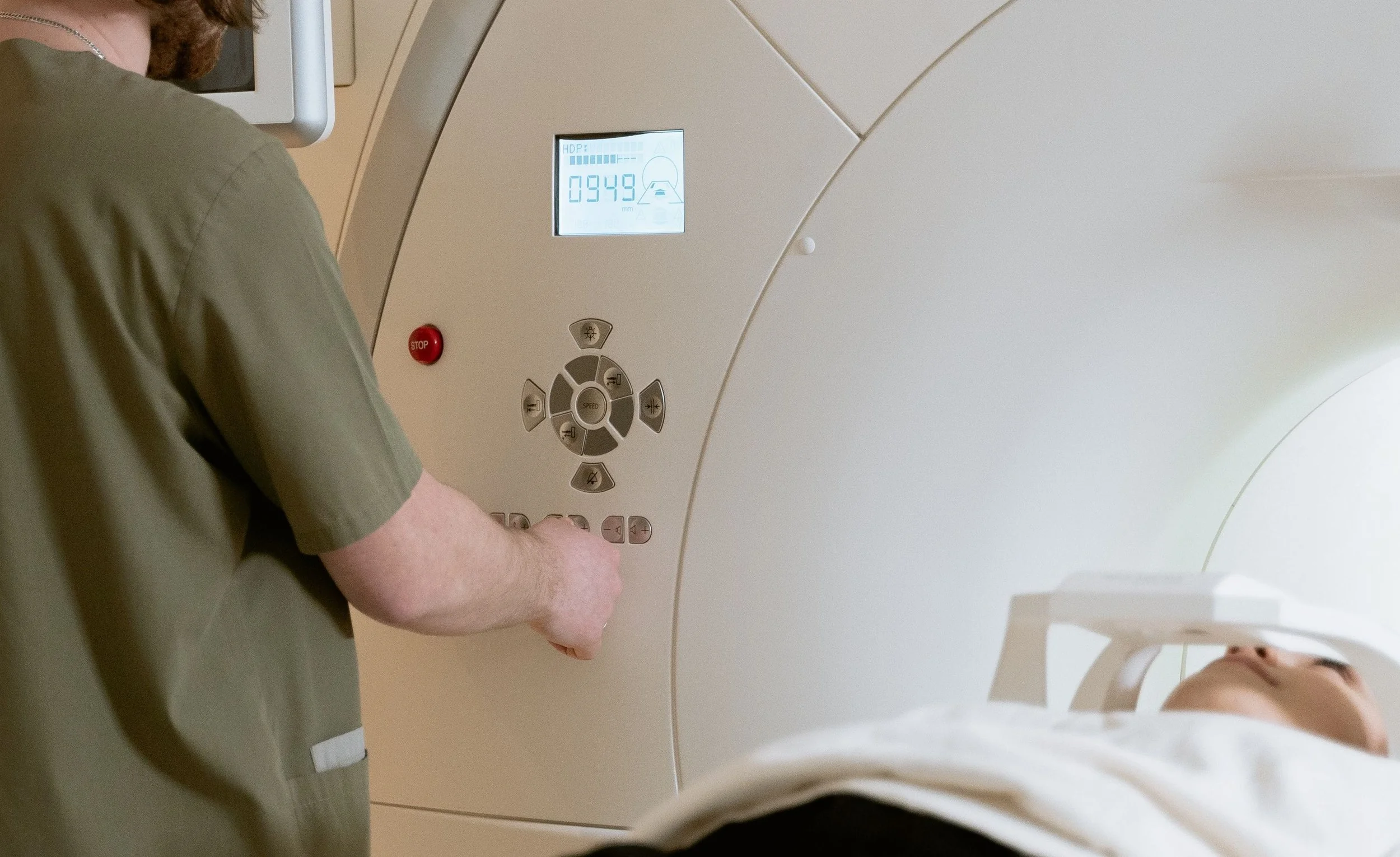
When it is time for the examination, you will lie down on a comfortable table that slides into the MRI scanner. The scanner looks like a tunnel that is open at both ends. The tunnel is well-lit and ventilated to make the experience as comfortable as possible.
While the images are being taken, the machine will make a fair amount of noise. You may hear banging or thumping sounds; this is completely normal and a sign that the camera is working. To dampen the sound, you will always be provided with hearing protection, and there is often the option to listen to radio or music during the scan.
You are never alone during the examination. The medical staff sits in the adjacent room behind a glass window and has eyes on you at all times. You can talk to each other via a speaker and microphone, and you will be given an alarm button to hold, which you can press if you need attention or wish to stop. The entire examination (full-body MRI) usually takes 60 minutes, and for the images to be sharp and useful, it is important that you lie completely still.
Before the examination
Usually, no preparations are required before an MRI, but there are exceptions depending on which part of the body is being examined. You will always receive specific instructions during your consultation with your doctor, but here are some common things to keep in mind:
For your safety, before the scan, you will answer questions about whether you have any metal in your body, such as a pacemaker, implants, or shrapnel.
For certain abdominal examinations, you may need to fast (not eat or drink) for a few hours before the visit.
Sometimes the intestine needs to be filled with fluid for the images to be clear. In this case, you will drink a salt-based solution at the clinic. You may also receive medication to calm bowel movements, which can temporarily cause dry mouth or blurred vision.
Avoid makeup, hair wax, and similar products if you are having your head examined. These products can contain tiny metal particles that interfere with image quality.
All piercings must be removed as the metal in the jewelry can heat up from the magnetic field and cause burns.
Feeling anxious?
It is completely normal to feel nervous before the examination. Remember that the scan is painless, but if you feel strong anxiety or suffer from claustrophobia, there are several ways to make the visit easier:
Let us know that you are worried before your examination. We are used to this and can give you extra support and information.
It is usually possible to receive sedatives before the examination. Talk to your doctor at Elfcare, and we will help you.
Read more about MRI and claustrophobia —>
Contrast agents
We do not use contrast fluid in full-body examinations. However, for certain specific examinations, a contrast fluid may be required. If this is relevant for you, your doctor will have informed you of this beforehand.
No known side effects
A major advantage of the magnetic camera is its safety. Today, there are no known biological side effects of the examination itself. Since the technology relies on magnetism and radio waves, you are not exposed to any ionizing X-ray radiation, which means you can be examined multiple times without increasing the risk of radiation damage.
After your examination
When your scan is complete, you can in most cases leave the clinic immediately and return to your normal activities. However, if you have received sedatives before the examination, it is important that you do not drive for the rest of the day, as the medication can affect your reaction time. Be sure to arrange a ride or take a taxi home instead.
When will I get my results?
You will not receive the results directly at the time of the examination. Instead, your images are carefully reviewed by our doctors, who weigh the findings together with the rest of your health check-up. This is done to provide you with a complete and comprehensive picture of your health status. You will receive your full result report within a week.
Understand your health today
Don’t wait for symptoms. Our comprehensive health scan gives you a detailed picture of your internal health.
Last updated: 30 July 2026
Reviewed by: Elfcare quality team